
Last updated: May 2026
Disclaimer: This content is for informational purposes only and does not constitute professional ambulance advice. Always consult a qualified professional before making ambulance decisions.
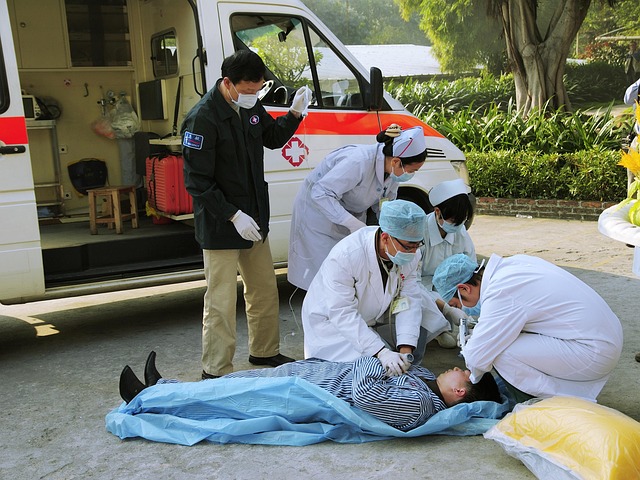
First aid cover for events is the professional provision of medically trained personnel, equipment, and facilities, including ambulances, to manage injuries and medical emergencies at public or private gatherings.
This service ensures immediate medical response for attendees, fulfilling legal and ethical duties of care for event organizers in Mumbai. It involves a risk assessment to determine the required level of cover, from basic first aiders to advanced paramedics with a fully equipped cardiac ambulance, ensuring a safe environment for everyone.
- Key Requirement: A thorough risk assessment dictates the level of medical provision needed.
- Personnel Involved: Can range from First Aiders and Emergency Medical Technicians (EMTs) to Paramedics and Doctors.
- Essential Equipment: Includes first aid stations, medical kits, defibrillators (AEDs), and on-site ambulances.
As an event organizer in Mumbai, you are responsible for the safety of every attendee. Whether you’re planning a corporate conference at the Jio World Centre, a marathon along Marine Drive, or a large wedding reception in Juhu, a medical emergency can occur without warning. You’re not just planning an event; you’re creating a temporary community, and with that comes the profound responsibility of care. This guide provides a clear, step-by-step process for securing professional first aid cover for events, ensuring you are prepared for any situation and can act decisively when moments matter most.
Prerequisites: Assessing Your Event’s Medical Needs
Before you can book any service, you must conduct a thorough medical risk assessment. This isn’t just paperwork; it’s the foundation of your event’s safety plan. An inadequate assessment can lead to insufficient cover, placing your attendees and your reputation at risk. According to India’s National Disaster Management Authority (NDMA) guidelines, pre-event planning is critical for managing mass casualty incidents.
Consider these factors for your Mumbai event:
- Event Type and Activities: A rock concert has a higher risk profile (dehydration, crowd crush) than a seated corporate seminar. A sports event like a football match carries a high risk of trauma injuries.
- Attendee Demographics: Are you expecting elderly guests, young children, or individuals with known medical conditions? Events with a wider age range typically require more comprehensive medical support.
- Event Size and Density: The sheer number of people is a primary factor. A densely packed crowd in a small venue increases the difficulty of reaching a patient quickly.
- Venue and Location: Is your event indoors or outdoors? Is it in a remote location far from the nearest hospital? Mumbai’s traffic patterns must be factored into emergency evacuation plans. An event in a location like the Bombay Exhibition Centre has different access challenges than one in a more remote part of the city.
- Event Duration: A multi-day festival requires more complex medical planning, including staff shift changes and restocking of supplies, compared to a 3-hour function.
- Historical Data: If this is a recurring event, review incident reports from previous years to anticipate common medical issues.
Step-by-Step Guide to Securing First Aid Cover in Mumbai
Follow this structured process to ensure you have reliable and compliant medical support for your event. Clarity and diligence here can prevent chaos later.
- Complete Your Risk Assessment: Use the factors listed above to create a detailed document. This will be the first thing a professional medical provider asks for. Quantify your needs: estimate the number of first aid posts, personnel, and type of ambulance required.
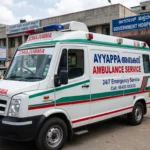
- Identify Potential Providers: Research reputable providers in Mumbai. This includes dedicated event medical companies, ambulance services that offer event cover like Ayyappa Ambulance Service in Mumbai, and organisations like St. John Ambulance or the Indian Red Cross Society.
- Request Detailed Quotations: Contact at least three different providers. Do not just ask for a price. Submit your risk assessment and ask for a detailed proposal that outlines their recommended level of cover. The proposal should specify the number of staff, their qualifications (First Aider, EMT, Paramedic), types of vehicles (BLS/ALS ambulance), and equipment provided.
- Verify Credentials and Insurance: This step is non-negotiable. Ask for proof of the provider’s insurance (public liability and medical malpractice). Request to see the qualifications and certifications of the staff who will be assigned to your event. A professional provider will have this information readily available.
- Review the Medical Plan: The provider should work with you to create a detailed Event Medical Plan. This document should include the locations of first aid posts, the designated medical command post, communication protocols (walkie-talkie channels), and escalation procedures for major incidents, including coordination with local Mumbai hospitals.
- Conduct a Pre-Event Site Visit: Walk the venue with the medical team leader. Finalize locations for the ambulance parking (with a clear exit route), first aid tents, and identify any potential hazards you may have missed. This is crucial for large or complex venues.
- Sign a Formal Contract: Ensure all agreed-upon details are in a legally binding contract. This should include arrival and departure times, exact services provided, staff numbers and qualifications, and payment terms. Avoid informal or verbal agreements.
- Brief Your Event Staff: Your entire team—security, volunteers, and management—must know who the medical provider is, where the first aid stations are, and how to summon medical help immediately. Every staff member should be able to direct an attendee in distress to the nearest medical point without delay.
Common Mistakes to Avoid When Booking Event Medical Services
Even with good intentions, organizers can make critical errors. Being aware of these pitfalls is the first step to avoiding them.
- Underestimating the Need: The most common mistake is booking the bare minimum to ‘tick a box’. This is a dangerous gamble. A single first aider for a 5,000-person event is grossly inadequate. The goal is not just compliance, but effective response.
- Ignoring Vehicle Type: Booking ‘an ambulance’ is not specific enough. A Basic Life Support (BLS) ambulance is suitable for transport and basic care, but events with higher risks (e.g., sports, large crowds) require an Advanced Life Support (ALS) or cardiac ambulance service in Mumbai, which is a mobile intensive care unit staffed by paramedics.
- Failing to Plan for Egress: Organizers often forget that an ambulance needs a clear, unobstructed path to enter *and* exit the venue at all times. Parking the ambulance behind a stage or in an area that gets blocked by crowds is a critical failure.
- Assuming Volunteers are Enough: While well-meaning, volunteer first aiders may not have the experience, equipment, or insurance to handle serious medical emergencies. Professional Event Medical Services are trained specifically for the dynamic environment of a live event.
- Last-Minute Booking: Reputable medical providers are booked weeks or months in advance, especially during peak event season in Mumbai. Waiting until the last minute will limit your options to potentially less experienced or poorly equipped services.
Expert Insight: Despite common advice to always get the most advanced (ALS) ambulance, for low-risk events like a small corporate seminar or an art gallery opening, a well-equipped Basic Life Support (BLS) ambulance with trained EMTs is often more cost-effective and fully compliant. The key is the quality of the risk assessment. Over-provisioning can be an unnecessary expense, while under-provisioning is a serious liability. A transparent provider will help you match the service to the actual risk, not upsell you on services you don’t need.
How to Verify the Credentials of Your Chosen Provider
Trust is earned through transparency and proof. Do not take a provider’s claims at face value. Perform your due diligence to protect your attendees and your organization.
- Ask for Staff Certifications: Request copies of certifications for the paramedics and EMTs who will be at your event. Check their validity and the issuing body.
- Inspect the Ambulance and Equipment: If possible, arrange to see the actual ambulance that will be deployed. Check for cleanliness, organization, and the condition of the equipment. Ensure defibrillators, oxygen cylinders, and medications are within their expiration dates.
- Check for Local Knowledge: A provider based in Mumbai will have invaluable knowledge of local hospital locations, traffic choke points, and emergency service protocols. Ask them about their primary receiving hospitals for your event’s location. This is a key reason why choosing a local ambulance service in Mumbai is so critical.
- Request References: Ask for contact information from organizers of similar events they have covered recently. A confident, professional service will be happy to provide this.
Event organizers in Mumbai who skip these verification steps for first aid cover for events often discover shortcomings only when an emergency is already underway, which is the worst possible time.
| Service Type | Typical Response Time | Coverage Area | Estimated Cost | Availability | Staff Certification |
|---|---|---|---|---|---|
| Ayyappa Ambulance | Immediate (On-site) | Mumbai Metropolitan Region | Moderate | 24/7, Pre-booked | Certified Paramedics & EMTs |
| St. John Ambulance India | Immediate (On-site) | Nationwide | Low to Moderate | Pre-booked, subject to volunteer availability | Certified First Aiders & Medical Officers |
| Indian Red Cross Society | Immediate (On-site) | Nationwide | Low to Moderate | Pre-booked, subject to volunteer availability | Certified First Aiders |
| Local Hospital EMS (e.g., Fortis) | Immediate (On-site) | Local vicinity of hospital | High | Pre-booked, often for large-scale events | Doctors, Nurses, Paramedics |
| Independent Paramedic Services | Immediate (On-site) | Varies by provider | Moderate to High | Pre-booked | Certified Paramedics |
Emerging Trends in Event Medical Support
The field of event medicine is continuously advancing, driven by technology and a greater emphasis on proactive safety. For event organizers in Mumbai, staying aware of these trends can significantly enhance attendee safety and operational efficiency.
One of the most significant shifts is the integration of real-time health monitoring and data analysis. Wearable technology, once limited to fitness tracking, is being explored for high-risk participants in endurance events like marathons. These devices can monitor vital signs and transmit alerts to a central medical tent if a participant shows signs of distress, allowing for a proactive rather than reactive response. Furthermore, event management platforms are beginning to integrate medical incident logging. Instead of paper forms, medics can use tablets to log every patient interaction. This data is instantly available to the medical command post, allowing for real-time tracking of incident types and locations. This helps identify potential hotspots in the venue—for example, a cluster of dehydration cases near a particular stage—enabling organizers to deploy resources like water stations dynamically.
Another key trend is the use of telemedicine for on-site consultations. For minor issues that may not require transport, an on-site paramedic can initiate a video call with an emergency physician. This allows for a higher level of medical advice without needing a doctor physically present at every first aid post, making expert care more accessible and scalable. In Mumbai, where traffic can severely delay transport, this capability to ‘bring the doctor to the patient’ virtually can be invaluable for making critical decisions on whether to transport a patient or treat them on-site. Regulatory bodies are also slowly adapting, with a greater push towards standardized qualifications for event medical staff and mandatory AED (Automated External Defibrillator) deployment at events over a certain size, a practice already common in many countries.
When to Call for Professional Help
The responsibility of ensuring attendee safety is immense. While this guide provides a framework, every event is unique. Professional consultation is not a sign of weakness but a mark of a responsible organizer. You should seek expert help when:
- Your risk assessment identifies multiple high-risk factors.
- The event spans multiple days or a very large, complex venue.
- You are expecting a large number of attendees (typically over 1,000).
- The event involves high-risk activities like contact sports, motorsports, or large-scale concerts.
- You are unsure about local regulations and legal requirements for medical cover.
Navigating the complexities of first aid cover for events requires expertise. For dedicated, professional, and reliable medical and ambulance support tailored to your specific event in Mumbai, contact the team at Ayyappa Ambulance. We provide comprehensive solutions, from initial risk assessment to on-site deployment of certified professionals and fully-equipped ambulances. Let us handle the medical planning so you can focus on delivering a successful and safe event. For more details on planning, see our expert guide to ambulance hire for events in India.
Author Note: This article has been reviewed for accuracy by a certified Paramedic with over 10 years of experience in emergency and event medical services.
What is the difference between a BLS and an ALS ambulance for an event?
A Basic Life Support (BLS) ambulance is staffed by EMTs and equipped for transport, basic monitoring, and first aid. An Advanced Life Support (ALS) ambulance is staffed by paramedics and equipped with advanced cardiac monitors, defibrillators, ventilators, and life-saving medications, effectively functioning as a mobile emergency room for critical situations.
What is a First Aid Post?
A First Aid Post (or station) is a designated, clearly marked location at an event where attendees can receive immediate medical attention. It is staffed by qualified first aiders or medical professionals and stocked with necessary supplies like bandages, antiseptics, and basic medications. For larger events, multiple posts are strategically placed for quick access.
How do I determine the number of medical staff needed for my event?
The number of staff is determined by your risk assessment. Factors include event size, type, duration, and attendee demographics. A common starting point is two first aiders per 1,000 attendees for a low-risk event, but this ratio increases significantly with higher risk factors. A professional provider will calculate the precise number needed based on your specific event profile.
How do I create a medical emergency response plan?
A medical emergency response plan is best created in collaboration with your chosen medical provider. It should detail staff roles, communication protocols (e.g., radio channels), locations of medical assets, emergency contact numbers for local hospitals, and clear procedures for handling everything from minor injuries to mass casualty incidents. This plan should be shared with all event staff.
Why does event first aid cover matter for legal compliance?
Event organizers have a legal ‘duty of care’ for their attendees. In the event of a serious incident, authorities will investigate whether adequate medical provisions were in place. Having professional first aid cover demonstrates due diligence, mitigates liability, and is often a mandatory requirement for securing event permits from municipal authorities in places like Mumbai.
What is the difference between a first aider and an EMT?
A first aider is trained in basic life-saving techniques, wound care, and managing common minor injuries. An Emergency Medical Technician (EMT) has more advanced training, including use of specific medical equipment, oxygen administration, and assisting paramedics. For most events, a mix of personnel with different skill levels provides the most effective and efficient coverage.
Is first aid cover for a private event worth it?
Absolutely. Accidents and medical emergencies are not limited to public events. For large private functions like weddings or corporate parties, having professional medical cover provides immense peace of mind. It ensures that if a guest has a sudden illness or injury, they receive immediate, expert care, which can be life-saving and protects you as the host from potential liability.
What are the best practices for event first aid cover in 2026?
Best practices for 2026 include conducting a data-driven risk assessment, integrating technology like digital incident logging, ensuring at least one AED is available for every 5,000 attendees, and creating a robust communication plan that links medical, security, and event management teams. There is also a growing emphasis on mental health first aid at multi-day events.