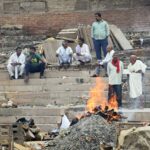

The Amavasya Calendar marks the new moon day in the Hindu lunar calendar, a period of significant spiritual importance.
It provides precise dates and ‘tithi’ (lunar day) timings essential for observing fasts (vrat), performing rituals like Tarpan and Shraddha for ancestors, and engaging in other religious practices. Each Amavasya holds unique significance, such as Mauni Amavasya for silent meditation and Somvati Amavasya for marital prosperity.
- Key Observance: Performing Shraddha or Tarpan to honour ancestors.
- Next Amavasya: The upcoming Ashadha Amavasya falls on July 14, Tuesday.
- Significance: A powerful day for spiritual practices, charity, and seeking blessings.
Understanding the Significance of Amavasya in 2026
Amavasya, the new moon day, is a foundational element of the Hindu lunisolar calendar. It marks the end of the dark fortnight (Krishna Paksha) and the beginning of the bright fortnight (Shukla Paksha). While often associated with darkness, this day is considered immensely powerful for spiritual activities. Devotees across Mumbai and India utilize this time for introspection, prayer, and rituals aimed at personal growth and honouring ancestral lineage.
The absence of moonlight is believed to minimize distractions, allowing for deeper meditation and connection with the divine. Many Hindus observe a ‘vrat’ (fast) and perform special pujas. Critically, Amavasya is the most important day for performing Shraddha and Tarpan—rites to pay homage to deceased ancestors (Pitars). It is believed that performing these rituals on Amavasya brings peace to the souls of the departed and blessings to the family. This makes having an accurate Amavasya Calendar essential for planning these deeply significant family ceremonies.
Complete Amavasya Calendar: Dates and Tithi Timings
Planning your spiritual observances requires precise timing. The ‘tithi’, or lunar day, does not align perfectly with the 24-hour solar day, meaning its start and end times can vary. Below is a comprehensive list of all Amavasya dates for the current year, with specific timings to help you schedule your pujas, fasts, and ancestral rites in Mumbai.
| Month (Amanta) | Amavasya Name | Date | Day | Tithi Begins | Tithi Ends |
|---|---|---|---|---|---|
| Pausha | Pausha Amavasya | January 16 | Thursday | Jan 15, 08:10 PM | Jan 16, 10:25 PM |
| Magha | Mauni Amavasya | February 15 | Saturday | Feb 14, 06:55 PM | Feb 15, 08:40 PM |
| Phalguna | Phalguna Amavasya | March 17 | Monday | Mar 16, 04:30 PM | Mar 17, 05:50 PM |
| Chaitra | Chaitra Amavasya | April 16 | Wednesday | Apr 15, 01:15 PM | Apr 16, 02:20 PM |
| Vaishakha | Vaishakha Amavasya | May 15 | Friday | May 14, 10:45 AM | May 15, 11:30 AM |
| Jyeshtha | Shani Jayanti | June 14 | Saturday | Jun 13, 09:20 PM | Jun 14, 09:55 PM |
| Ashadha | Ashadha Amavasya | July 14 | Tuesday | Jul 13, 08:10 PM | Jul 14, 08:30 PM |
| Shravana | Hariyali Amavasya | August 12 | Tuesday | Aug 11, 07:55 AM | Aug 12, 08:05 AM |
| Bhadrapada | Bhadrapada Amavasya | September 10 | Wednesday | Sep 09, 09:00 PM | Sep 10, 08:45 PM |
| Ashwina | Sarva Pitru Amavasya | October 10 | Friday | Oct 09, 11:25 AM | Oct 10, 10:50 AM |
| Kartika | Diwali Amavasya | November 8 | Saturday | Nov 07, 03:40 PM | Nov 08, 02:50 PM |
| Margashirsha | Margashirsha Amavasya | December 8 | Monday | Dec 07, 09:15 AM | Dec 08, 08:00 AM |
Note: Timings are based on the New Delhi, India time zone and may vary slightly for Mumbai. It is always advisable to consult a local panchang for the most precise timings.
Step-by-Step Guide to Amavasya Vrat and Rituals
Observing Amavasya involves specific practices that vary by family tradition and the particular Amavasya. However, a general framework can be followed to ensure the rituals are performed with devotion and correctness. This is especially important when conducting rites for ancestors.
- Prerequisites & Sankalpa (Vow): The day before Amavasya, consume a simple, sattvic meal. On Amavasya morning, wake up before sunrise, take a holy bath (or a clean bath at home), and wear fresh clothes. Take the ‘Sankalpa’, a sacred vow, by holding water in your palm and stating your intention to observe the fast or perform the puja for the well-being of your family and ancestors.
- Surya Arghya (Offering to the Sun): Offer water to the rising sun (Surya Deva) from a copper vessel, chanting the Gayatri Mantra or a simple sun mantra like ‘Om Suryaya Namah’. This purifies the self and environment.
- Pitra Tarpan (Offering to Ancestors): This is the most crucial ritual. Facing south, offer a mixture of water, black sesame seeds (til), and rice to your ancestors. This is typically done near a river or at home. Chanting ‘Om Pitra Devaya Namah’ is common. This act is believed to satisfy the souls of the departed.
- Puja for Deities: Perform a simple puja for your family deities. Light a lamp (diya) with ghee or sesame oil. Offer flowers, incense, and a simple prasad like fruits or kheer. Many devotees also worship Lord Shiva or Lord Vishnu on this day.
- Donation (Daan): Charity is highly meritorious on Amavasya. Donate food, clothing, or money to the needy, priests, or a temple. Feeding crows, cows, and dogs is also considered a sacred act, as they are believed to represent ancestors or divine beings.
- Observing the Fast (Vrat): If you are observing a fast, you may consume only fruits, milk, and water throughout the day. The fast is typically broken after sunset, following the evening prayer.
- Evening Prayer and Breaking the Fast: After sunset, perform an evening aarti. Offer your prayers and then break your fast with a simple, sattvic meal.
Common Mistakes to Avoid During Amavasya Rituals
To ensure the sanctity of your observance, avoid certain actions. It’s advised not to start new ventures, make major purchases, or engage in arguments. Maintain a calm and spiritual atmosphere at home. When performing Pitra Tarpan, ensure you are clean and focused. Rushing through the rituals or performing them without sincere intention can diminish their effect.
Expert Insight: Many families in Mumbai focus intently on the auspicious tithi for cremation but overlook the practical documentation required by municipal authorities. A common mistake is assuming a death certificate can be obtained instantly. The process can take several hours. We always advise families to initiate the paperwork with the doctor and local ward office immediately after a death, even if the cremation is planned for the next day. This prevents stressful delays and ensures the final rites, like those planned around an Amavasya, proceed smoothly and with dignity. For comprehensive support, consider our funeral and cremation services in Mumbai.
Popular Amavasya Observances and Their Meanings
While every Amavasya is significant, some have special names and associated rituals that are widely observed. Understanding these can add deeper meaning to your spiritual practice.
Mauni Amavasya (Magha Amavasya)
Falling in the Hindu month of Magha, this is one of the most important Amavasyas. ‘Mauni’ means silence. Devotees observe a vow of complete silence (Mauna Vrat) for the entire day to achieve mental peace and control. Taking a holy dip in sacred rivers like the Ganga is considered highly auspicious on this day.
Somvati Amavasya
When an Amavasya falls on a Monday (Somvar), it is called Somvati Amavasya. This is a rare and highly auspicious occasion. Married women observe fasts and worship the Peepal tree for the long life and well-being of their husbands. It is believed that circumambulating the Peepal tree 108 times on this day brings immense blessings.
Sarva Pitru Amavasya (Mahalaya Amavasya)
This Amavasya, falling during the Pitru Paksha period in the month of Bhadrapada or Ashwina, is the single most important day for performing Shraddha for all deceased ancestors, especially for those whose death tithi is unknown. It is a day of collective remembrance and offering gratitude to one’s entire lineage.
When to Seek Professional Assistance for Funeral Rites
Losing a loved one is an emotionally overwhelming experience. While families strive to perform the last rites according to tradition, the logistical challenges can be immense, especially in a city like Mumbai. Arranging for a death certificate, coordinating with the crematorium, and transporting the deceased with dignity requires immediate and clear-headed action. This is a time when professional help is not just a convenience but a necessity.
You should call for professional help immediately if you need:
- Dignified Transportation: A specialized vehicle is required to transport the deceased from home or hospital to the crematorium. Our dead body ambulance service in Mumbai is available 24/7 for this purpose.
- Crematorium Coordination: Booking a slot, especially at busy crematoriums like the Shivaji Park crematorium, and managing the associated paperwork.
- Guidance on Rituals: Assistance in finding a priest (pandit) and procuring all the necessary items (samagri) for the final rites.
- Emotional and Logistical Support: Having a compassionate team to handle the arrangements allows the family to focus on grieving and supporting one another.
Ayyappa Ambulance provides end-to-end funeral services, ensuring that every step is handled with respect, efficiency, and adherence to your family’s traditions.
Emerging Trends in Observing Traditions in Mumbai
Even timeless traditions are adapting to the modern urban environment of Mumbai. The way families access information and services for religious observances and funeral rites is changing. Current data from sources like the Pew Research Center highlights that while religious commitment remains strong in India, practices are evolving.
One significant trend is the use of digital platforms. Mobile apps and websites now provide hyper-local panchang details, including precise Amavasya tithi timings for Mumbai, removing the reliance on printed calendars. Online services have also emerged for booking pandits for various rituals, including last rites, making it easier for families to find qualified priests, especially if they are new to the city.
In the context of funeral services, there is a growing preference for professional, integrated service providers. In the past, families would coordinate with multiple individuals—a vehicle provider, a pandit, the crematorium staff. Today, services like Ayyappa Ambulance offer a single point of contact. This professionalization ensures transparency, reliability, and adherence to municipal regulations, which is critical during a time of distress. Furthermore, eco-friendly cremation options are gaining traction, reflecting a broader societal shift towards environmental consciousness. These trends indicate a move towards blending tradition with modern efficiency and values.
Disclaimer: This content is for informational purposes only and does not constitute professional emergency services advice. Always consult a qualified professional before making emergency services decisions.
This article has been reviewed by a qualified funeral services director for accuracy and sensitivity.
Frequently Asked Questions about Amavasya
What is Amavasya Tithi?
Amavasya Tithi is the specific time period of the lunar day of the new moon. Unlike a solar day, a tithi’s duration can vary from 19 to 26 hours. Knowing the exact start and end time of the Amavasya Tithi is crucial for determining the correct window to perform religious rituals, fasts, and ancestral rites like Shraddha for them to be considered effective.
What is the difference between Amavasya and Purnima?
Amavasya is the new moon day, marking the darkest night of the lunar month when the moon is not visible from Earth. It signifies the end of the waning phase (Krishna Paksha). Purnima is the full moon day, the brightest night when the entire face of the moon is illuminated. It marks the end of the waxing phase (Shukla Paksha). Both are spiritually significant but for different types of rituals.
How do I perform Tarpan for ancestors at home?
To perform Tarpan at home, take a bath and wear clean clothes. In a clean area, face south. Use a copper pot to pour a mixture of water, black sesame seeds (til), and a little milk over your right thumb, letting it flow into a larger vessel. While pouring, chant mantras for your ancestors, expressing gratitude. Afterwards, the collected water can be respectfully poured at the base of a plant.
How do I find the exact Amavasya time for Mumbai?
While our Amavasya calendar provides a reliable guide, the most accurate timings for Mumbai can be found using a local panchang or a trusted astrological app that allows you to set your specific location. These resources account for minor geographical variations in sunrise, sunset, and moon phases, ensuring your rituals are performed within the precise tithi period for your city.
Why does observing Amavasya matter?
Observing Amavasya matters as it is considered a spiritually potent day in Hinduism. It is an ideal time for introspection, meditation, and connecting with the divine. Most importantly, it is the designated day for honouring ancestors through Shraddha and Tarpan. These rituals are believed to provide peace to departed souls and bring blessings, prosperity, and harmony to the family lineage.
Is fasting on Amavasya worth it?
For devotees, fasting (vrat) on Amavasya is considered highly beneficial. It is believed to cleanse the body and mind, reduce negative planetary influences, and enhance spiritual focus. The practice is not just about abstaining from food but also about conserving mental and physical energy to direct it towards prayer and meditation. The spiritual and health benefits make it a worthwhile practice for many.
What are the current best practices for arranging last rites in Mumbai?
Current best practices involve immediate documentation, professional coordination, and clear communication. First, secure the doctor’s certificate of cause of death. Next, engage a professional funeral service provider to handle transportation, crematorium booking, and paperwork with the BMC. This ensures compliance with all regulations and allows the family to focus on their grief rather than logistics. Using a single, trusted service is now the standard.
What is the significance of the holy dip on Amavasya?
Taking a holy dip in sacred rivers like the Ganga, Yamuna, or Godavari on Amavasya is a tradition of immense significance. It is believed that this act purifies an individual of their sins and negative karma. The spiritual energies are considered to be at their peak on this day, making the water of these holy rivers especially potent for spiritual cleansing and renewal. It is a key ritual, especially on Mauni Amavasya.